Showing posts with label CTAA. Show all posts

Tuesday, January 24, 2012

TA Opportunities for Rural & Tribal Communities

Community Transportation Association of America
CTAA is currently seeking applicants for its 2012 Rural and Tribal Transportation Technical Assistance Program. Through the rural and tribal programs, CTAA offers free hands-on technical assistance to rural communities and tribal organizations. The assistance can help start new transit programs, expand or enhance existing services, or develop facilities.

Projects will stimulate economic development and small business growth. The results of the Maine project, described below, were featured in a New York Times opinion piece, Thinking Outside the Bus.

Typical Project Gets Attention

The following are some typical projects.

Brunswick, Maine-Technical assistance project developed plan for implementation of new transit service in Brunswick, serving local residents and students of Bowdoin College. The Brunswick Explorer service will interface with extension of Amtrak's Downeaster trains to Portland and Boston. The transit service will also serve the multiuse redevelopment of the former Brunswick Naval Air Station site.

According to the New York Times (the primary news source for my extended family):
In the world of public transit, the Brunswick Explorer is a radical idea. Its genesis came from a coalition of local social service agencies — organizations that work with the elderly, mentally ill, disabled, homeless, as well as with college students and local hospitals. They approached Coastal Transit, a nonprofit regional transit provider to be a part of their coalition. Coastal Transit’s executive director, Lee Karker, had worked on two other rural bus systems that fell apart. Both were designed to fill objectives other than helping riders; one was supposed to clear congestion out of a tourist town, and the other just drove from one end of town to the other without much regard for where riders wanted to go. Karker describes the process of setting up the Explorer as “more organic.” “Before when we looked at bus routes we got input on traffic patterns, not input from the users,” he said. “Now we’re trying to be more entrepreneurial.” Working as part of the coalition, rather than as transit engineers, changed their worldview. “We have a tendency to make a transit system look the way we think it should look rather than what the community needs and what they want,” Karker said.
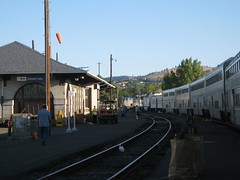
[Klamath Falls, Ore., where Amtrak meets local transit.]

Sitka, Alaska- CTAA provided service planning assistance that led to establishment of public transit services operated by the Sitka Tribe of Alaska. Assistance also helped identify facility needs for transit operations and vehicle maintenance.

Rhinelander, Wisconsin- Project enabled community to establish mobility management program to provide coordinated public transit service in three counties.

Eastern Band of Cherokee Indians, North Carolina- Technical assistance helped Cherokee Transit enhance the effectiveness and efficiency of its services, including a park shuttle serving the Great Smoky Mountains National Park. Assistance also helped Cherokee develop plan for new transit facility.

Guidelines


The Programs provide planning assistance only, from CTAA staff and consultants. Although CTAA cannot provide operating or capital funding through the Programs, potential funding sources for implementation will be identified.

Rural projects must be located in communities of less than 50,000 population, and outside designated urbanized areas. Applicants must be for-profit or not-for-profit entities; potential governmental applicants should contact CTAA for further guidance.

Tribal applicants should be federally-recognized tribal entities.

Deadline Approaching

Applications are for long-term projects and are due at CTAA by February 7, 2012. Long-term projects will be selected competitively. CTAA also provides short-term technical assistance; applications can be submitted at any time. For more information contact Charles Rutkowski at 202.299.6593, e-mail at rutkowski@ctaa.org, or visit the website of the Rural and Tribal Transportation Technical Assistance Program.

Friday, October 14, 2011

Upcoming Events & Training; Local Perspectives on Livability

Federal Transit Administration
FTA has upcoming listening sessions and webinars about civil rights and environmental justice. The listening sessions will discuss the proposed circulars about those topics.

National Transit Institute
Strollers, Carts, and Other Large Items on Buses and Trains (TCRP Synthesis 88) - webinar - Nov. 17, 2011. This webinar will highlight practices implemented by transit agencies to manage the capacity on vehicles carrying customers with large items, including wheelchairs; Segways; scooters and other mobility aids; strollers; bicycles; luggage, and miscellaneous items, such as skis and dog carriers. A review of the various types of transit vehicles and modifications agencies have made to their vehicles to accommodate large items will be discussed.
Managing Community Mobility - various dates to March 2012.
Comprehensive ADA Paratransit Eligibility - various dates to March 2012.

Community Transportation Association of America
CTAA Train-the-trainer for driver training, safety and security, and transportation solutions coordinator work. Visit CTAA's training page for more information.

Easter Seals Project ACTION
Accessible Transportation Coalitions Initiative - currently accepting applications. ESPA will select 10 communities through a competitive application process to participate. ATCI is a systems change model designed to improve accessible transportation options for people with disabilities. Selected communities will receive on-site facilitation and targeted technical assistance during a two-day event to learn the ATCI model and develop an accessible transportation plan. ESPA will continue to provide targeted technical assistance over the subsequent year while communities implement this plan.
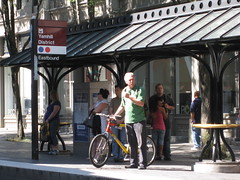
[Portland light rail station with biker waiting for the train.]

Misconceptions about Livability


A new report from the Federal Highway Administration (FHWA) looks at perceived barriers to livability projects in rural, tribal and other types of areas. The Regional Livability Workshops report summarizes five workshops held across the country and suggests strategies
"to raise awareness of transportation linkages to livability, and to provide resources to practitioners and the public to more effectively consider livability issues within the Federal transportation planning process."
While most communities do have a set of goals or vision statements, workshop participants noted that the most effective visions are those that emerge from a collaborative visioning, planning or scenario development process. Participants noted quite often, these efforts include a strong outreach process that brings together both multidisciplinary interests as well as public and private constituencies. These processes can spur lasting relationships and coalitions that ultimately help create local keepers of the vision. It was also noted when a strong vision is present, project prioritization and project delivery methods can demonstrate clear policy choices between various alternatives. This direct link helps foster identification and implementation of transportation investments in support of community goals.

Community goals reflect the unique character, values, and priorities of a given place. Participants discussed the need to better align regional, State or Federal goals in transportation and mobility with local community goals. One strategy includes documenting existing goals at each level (Federal, State, regional and local) or across differing agencies and identifying where commonalities or conflicts exist. This can help to understand the tradeoffs or policy issues that need to be considered to more effectively align transportation priorities with local livability goals.

Livability TA

Environmental Protection Agency
EPA’s fall 2011 Request for Letters of Interest (PDF: http://www.epa.gov/smartgrowth/pdf/buildingblocks_2011_rfli.pdf) for direct assistance from the agency is now open. EPA will be accepting letters of interest for the next round of Building Blocks for Sustainable Communities from September 28 to October 28, 2011. Subsequent application periods will depend on budget constraints and will be announced on the Smart Growth page.

Local Stories

Twitter brings interesting stories to me and succinctly exposes my brain to useful and inexpensive tools for transit and other mobility options. This article from the Tennessean, More Cyclists, Walkers Counted in Middle TN, demonstrates that a cheap, volunteer tool can provide a snapshot of how people travel at what locations. Since a pedestrian-friendly street network is essential to transit, a one-day audit in a Tennessee community supplied useful information about where people are willing to walk and bike. Although biking is not an option for many handicapped individuals and is not a preference for many others, the bicycling rate is an indicator of how safe the street network feels to non-auto users.

Th Broome County, New York area (Binghamton area) is creating a one-call transportation center. This week, CTAA hosted a Transportation Solutions training, which was covered in the local news. The Broome-Tioga Mobility Management Project (BTMMP) call center will be housed at the local United Way. The BTMMP partnership was created to help meet the need for increased transportation services in both Broome and Tioga Counties. BTMMP will help those in need to arrange and coordinate transportation using all available resources. The BTMMP partners have been planning the project since December 2010.
BTMMP is a multi-agency partnership funded in part by the Community Foundation for South Central New York; the AmeriCorps National Service Program; Tioga Transport, Inc.; and with in-kind contributions from BTMMP partner organizations.

Food for thought: One thing I noticed in reading a local article about transportation options desired in a rural community was that the meeting to air the community's wish list was taking place on a weekday morning during traditional work hours. Well-organized advocates and staff of government organizations were expected. No mention was made of remote access or feedback or why a time that would exclude most working people would be chosen.
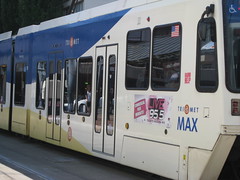
[Portland light rail on a Saturday morning.]

Thursday, September 22, 2011

Emergency Planning - Collection of Resources & Events

Maybe it was the week of the earthquake and the hurricane that jolted the thought of emergency preparedness to come to the attention center of my brain. We have had a spring and summer with quite a bit of emergency planning, actual disasters and the recoveries that follow. In some cases, the weather events were less than expected and in others, much worse. Here are some resources and events for transportation-related emergency planning issues.

Resources

Preparedness Considerations for Aging Americans - recorded webinar - This webinar provides information about specific preparedness steps for Aging Americans. Speakers will include representatives from the Federal Emergency Management Agency and leaders at the forefront of Aging American Preparedness. Advanced registration for this webinar is not required.

This and other emergency planning webinars are archived at http://www.citizencorps.gov/news/webcasts.shtm.

National Association of County and City Health Officials
NACCHO has a Learning Community on Emergency Planning and Preparedness for People with Disabilities. NACCHO’s Health and Disability Project is supported by the National Center on Birth Defects and Developmental Disabilities at the Centers for Disease Control and Prevention.

Events


How to be FEMA Ready When Disaster Hits
(Rebroadcast) - audio/web broadcast - Oct. 11, 2011 - Pointing out that within the last five years, every state has had at least one disaster declaration, APWA presents this program to help identify what should be ready before disaster strikes and what can be expected when dealing with FEMA after the disaster. Participants will learn how to justify the value of a good asset management system that gives quantifiable information to help identify the cost of bringing assets back into use and how to estimate the length of time and resources involved in the recovery process.

National Evacuation Conference
- Feb. 7-9, 2012, New Orleans - Conference brings together the fields of transportation and emergency management to discuss evacuation planning to accommodate the needs of all people before, during and after a major disaster. The objective is to foster an interdisciplinary exchange of ideas surrounding a broad range of evacuation issues, particularly mass evacuations.

Public Works Peer Activity


American Public Works Association
APWA is developing an emergency management peer network. It requests that members share their expertise about the different facets of emergency preparedness, response, mitigation, planning, and recovery. The "database will operate as an in-house listserv for APWA members who need advice or information on emergency management matters."
Coast Starlight train - Calif.
[View from a California train ride.]

Blasts from the Past


Here are some emergency preparedness resources featured before.

Community Transportation Association of America

National Resource Center
The NRC keeps an Emergency Preparedness and Response bookshelf with reports about transportation issues in disaster planning.

CTAA has an Emergency Evacuation page on its site with checklists, toolboxes and other resources that focus on populations, locations, and different types of professionals.

National RTAP - the Rural Transit Assistance Program
RTAP has a free training module, Emergency Procedures for Rural Transit Drivers. The training includes a Learner’s Guide, a Self-paced eLearning Course Disc, an Instructor’s Guide, and a disc with videos and a trainer’s PowerPoint presentation. It can be used in a classroom setting or by a single student, and is appropriate for both new and experienced transit drivers. The training offers information on preparedness for hazards and threats that may be encountered as a transit operator. This training module also offers targeted training on the Seven Steps of Crisis Management.

For more information, please contact Pam Russell DiGiovanni at 888-589-6821 or pdigiovanni@nationalrtap.org.

For those even more involved in emergency planning is FEMA's lessons learned website. For those updates, there is a lessons learned newsletter available at the site.

Thursday, September 1, 2011

Webinars and Events

Performing For Individual, Organizational and Collective Impact - webinar - Sept. 14, 2011 at 2 p.m. Eastern time. The Partnership for Mobility Management and CTAA jointly present this webinar to explore the fundamentals of performance measurement. The webinar will cover results-based accountability to support quality of life, and mobility management measures that gauge success of programs and outcomes for customers. 

Creative Solutions to Reduced Funding for Public and Human Services Transportation - webinar - Sept. 20, 2011 at 2 p.m. Eastern time. Webinar speakers are representatives of communities that have taken different approaches to solving or alleviating the problem of cutbacks as well as a panel representing national organizations.  

Digital Transportation Exchange (DTE) - Stakeholder meeting in-person or via webcast or phone - Sept. 16, 2011 at 9 a.m. Eastern time. DTE is being created by DOT as an online platform for transportation solutions. The stakeholder meeting is taking place during the platform's formation to give DOT feedback from stakeholder groups and subject matter experts. Respond by tomorrow, September 2, by email to open@dot.gov and indicate how you intend to participate. Thank you to Easter Seals Project ACTION for this news. 

[Angel's Flight railway in downtown Los Angeles.]

Office of Civil Rights Workshop - Sept. 22-23, 2011, Berkeley, CA. FTA Staff will be available to review DBE Goals and Title VI & Limited English Proficiency (LEP) Programs. There will also be trainings covering Disadvantaged Business Enterprise (DBE) program requirements, Equal Employment Opportunity (EEO) regulations, Title VI Requirements for FTA recipients, and Limited English Proficiency (LEP) rules. (This workshop will be hosted in conjunction with the California Association of Coordinated Transportation (CalACT) Autumn Conference. It is not required to attend the CalACT Autumn Conference in order to attend the FTA Office of Civil Rights workshop.)  

NTI has upcoming webinars and classes around the country on many topics, including the National Transit Database, reporting to the rural transit database, mobility management, funding for transit maintenance, and small systems waivers. 

Thursday, July 21, 2011

Transportation Technical Assistance Resources: Seniors

Community Transportation Association of America
CTAA has a senior mobility page with resources about issues that are important to, elders.
* Volunteer driver programs as an in-kind match;
* Maintaining quality transportation in economically difficult times;
* The cost of living at home and using transit versus relocating to an assisted living facility; and
* How long-term care and independent living residents can benefit from community transportation services.

The last resource has information about technical assistance that CTAA and the National Center on Senior Transportation provide. NCST is a technical assistance center administered by Easter Seals Inc., in partnership with the National Association of Area Agencies on Aging.

National Center on Senior Transportation
Many of the resources that NCST is currently featuring have been covered recently here and in the Express Stop. These include reports and events concerning taxis, Indian country, and, noted above, the resource about transportation aspects of the decision about whether to relocate in old age.

NCST has also posted links to:
* Maturing of America Survey by N4A;
* Aging in Place report by Transportation for America; and;
* Toolkit for One-Call/One-Click Transportation Services and related resources produced by CTAA.

Aug. 3 NCST webinar: Ride or Relocate? Transportation and Housing Options for Senior Adults - Speakers will address results from a study in North Dakota that quantified the cost of living at home and riding transit versus relocating to an assisted living facility and will provide strategies for reaching out to older adults living at home.

Community Transportation Association of America
CTAA's Joblinks program has an older worker page with issue briefs that describe the needs of older workers and suggested solutions.

[My aunt walked up the subway steps by this mosaic in Sheepshead Bay, Brooklyn, during her years commuting, which continued until she was 87.]

Friday, April 8, 2011

One-Call Toolikit Debuts, Local Stories and More

The Community Transportation Association of America (CTAA) debuts the One-Call - One-Click Toolkit, which gives communities a map, as it were, of the steps to take in starting a one-call or one-click service for transportation that will either add on to an existing service, such as a 211 or Aging and Disability Resource Center, or will be an entirely new community resource. Topics such as functions to consider, the importance of partnerships and leadership, and what successful approaches already exist are explored in guided chapters, fact sheets, case studies and advice from experts.

The Disability Law Handbook, updated for 2011, is released. There is a chapter about transportation that discusses the obligations of transit and other providers as well as an explanation about paratransit. The handbook is written for the lay person.

Public Participation

SeeClickFix is launching a new Facebook application that will make public participation easier and, I suspect, more effective. Facebook users will be able to report on community issues, from pothole problems to transit initiatives, through their Facebook accounts. True, not everyone is totally wired and not everyone uses Facebook, but the expansion of apps, smart phones and Internet tools are heading toward becoming universal. These tools, generally developed for urban environments, are potentially more useful in rural areas without good transit and other means to attend public participation meetings long distances from where people live and work - especially for people who do not get out of their homes easily. SeeClickFix, reportedly mindful of its place as a convener and enabler of recent Mideast revolutionary activity, views this new application as an opportunity to increase community involvement. More details about the new application and how it is being used are available in a post from the CityFix blog.

[Editor's Note: This post was revised due to the incorrect identification of the launching company as Facebook instead of SeeClickFix. The fact that I could not get through Zen and the Art of Motorcycle Maintenance is readily apparent. Readers kindly pointed out my error. Thank you. I hope I have gotten this right.]

Local Stories of Tough Times for Transit

Trumbull County, Ohio, offers a case study in how a community is handling the fiscal demands of running a transit system and human services transportation. The linked article discusses funding sources and county control to save local dollars. Trumball County is in Northeastern Ohio.

Minnesota's Senate voted to cut funding for transit, particularly passenger rail between the Twin Cities and Duluth, but resisted a bid to eliminate funding entirely for the state's passenger rail office. In a statement that speaks for the benefits of coordination and partnerships, Duluth Senator Roger Reinert urged his counterparts, "Let's keep the coordination of these transit places in place so we're not back to this position of just taking them piecemeal as they come. But we're doing one plan that's good for Minnesota."

Events


National Transit Institute

NTi has upcoming classes in metropolitan planning, statewide planning, transit-oriented development, ADA eligibility, and attracting senior drivers to public transportation. More information is available at http://www.ntionline.com/Courses.asp.

Tuesday, December 7, 2010

2010 Highlights

I am starting the recap early this year, going over notes, my blog, the index of my old newsletter, and thinking about what from 2010 resonates and will last as useful resources and information as the calendar page turns over to 2011.

Wishing you and your loved ones a happy and a healthy holiday season and a joyous new year.

Stay Up to Date at the National Resource Center for Human Service Transportation Coordination
Go to the NRC website - www.NRCtransportation.org - for news and information from around the country, such as the blogs of the United We Ride Ambassadors. The NRC also has resources about all aspects of public and human services transportation, including several compilations about significant topics.

New News Sources

The Association for Commuter Transportation (ACT) has launched a newsletter, Caryn's Corner, named for Executive Director Caryn Souza.

The National Conference of State Legislatures (NCSL)created two transportation-related newsletters, one is the Transportation Coordination Quarterly Newsletter, a compilation of news and resources involving coordination, and the other a monthly newsletter that spans transportation sectors.

Specialized Taxi Transportation

In 2010, the Taxi, Limousine, and Paratransit Association (TLPA) prepared reports that address the taxi industry's role in providing non-emergency medical transportation and accessible transportation. These are Assessing the Full Cost of Implementing An Accessible Taxicab Program and Non-Emergency Medicaid Transportation (NEMT): How to Maximize Safety and Cost Effectiveness
Through Better Use of Private For-Hire Vehicle Operators
. The accessible transportation report discusses how the taxi industry works in terms of the practical obstacles and costs of providing accessibility where the additional costs fall on mostly small businesses and independent contractors. The NEMT report provides an excellent explanation of what coordination provides and what models of NEMT exist throughout the country.

Learning about Health Care Changes
For information on what states must accomplish and are doing to fulfill the mandates of the new health care law, the National Governors' Association (NGA) has created a website, the Health Reform Implementation Resource Center, a product of the State Consortium on Health Care Reform Implementation (State Consortium), which provides information and technical assistance to states about requirements, offers options and best practices and synthesizes feedback to federal agencies on issues that affect state implementation. The website has resources on aspects of the health reform law that are likely to have the biggest effect on states – the Medicaid expansion, the establishment of health insurance exchanges, insurance regulations, and delivery system initiatives, along with important governance, coordination and timing issues for states are available from NGA and on each of the Consortium members' websites.

The American Public Human Services Association (APHSA) has a short presentation, Health Reform: Issues for State Governments, that explains the effective dates of different provisions, what will happen to Medicaid, and summarizes long-term care and other provisions.

With greater numbers of people to be covered by Medicaid and preventive and maintenance medicine to be practiced, there may well be many more people traveling to regular doctor appointments. The Community Transportation Association of America is assisting providers with training, the Competitive Edge, to enable providers to be more efficient for when the new law takes effect.

Transportation for Challenged Populations

The American Public Transportation Association (APTA) report, Funding the Public Transportation Needs of an Aging Population, discusses the depth of the growing need for transportation services among Older Americans and the amounts of funding that will be necessary to provide those services. In addition to APTA, the report was guided by input from a technical working group that included CTAA, Easter Seals Project ACTION, and the AARP Public Policy Institute, all members of the National Consortium on the Coordination of Human Services Transportation.

The Federal Transit Administration (FTA) has a multitude of resources related to the intersection of transit and the ADA. These include regulations, legal guidance, details about equipment and paratransit eligibility, and so much more. A new page has topic guides on selected ADA topics.

The Easter Seals Project ACTION website always has resources for government staff, transportation providers and transportation-challenged populations. These resources offer information to improve services, educate staff and enhance public participation.

Census Guides the Future

Census 2010 and Transit: What's at stake? is a web portal that the NRC created for transit-related Census resources. The 2010 Census will help communities receive over $400 billion in federal funds each year for many activities including transit and human services. Visit the NRC's Census 2010 page to read about how public transportation may be affected, learn about possible outcomes for tribal communities, and find a list of quick links to audio and video clips about the Census.

State-Level Sustainability Plans
State-wide sustainability and livability movements are turning into established parts of state governments with plans that span different sectors of the economy and public works, including transportation. At their core, these plans envision transportation systems that meet present needs without compromising the lifestyles of future generations.

Hawaii's plan, Hawaii 2050, incorporates increased public transportation as a goal and an indicator of progress under its community and social well-being heading. Hawaii's plan goes way beyond the environment, addressing such different issues as the economy, education and health care.

The Department of Transportation for Washington, D.C., the equivalent of a state department of transportation that also has jurisdiction over local roads, releases its Sustainability Plan 2010, which promotes transit, biking and walking and seeks to reduce energy consumption.

The Oregon Department of Transportation also has a sustainability plan. It emphatically incorporates public transportation and the environmental and health benefits of zero and low-emission modes. The state DOT also commits to a policy of locating its own facilities in places that employees can reach by walking and transit.

State Planning Participation

The National Association of Development Organizations (NADO), via its Rural Transportation Clearinghouse, posted a presentation that local officials can use or modify for orientation of new board members, transportation committee members or staff. The Guide for Rural Local Officials: Evaluating Your Input into the Statewide Transportation Planning Process explained the local role in state transportation planning across modes. The guide was also available in a PowerPoint format.

NADO also released a new online version of its Metropolitan and Rural Transportation Planning: Case Studies and Checklists for Regional Collaboration. This guide was intended for leadership and professional staff of metropolitan planning organizations (MPOs), rural planning organizations (RPOs), state departments of transportation (DOTs), and regional development organizations that are involved in transportation planning, programming, and service delivery, and other planning partners.

The Federal Highway Administration (FHWA) has released an MPO primer, Staffing and Administrative Capacity of Metropolitan Planning Organizations. It is a terrific nuts and bolts detailed description of Metropolitan Planning Organizations (MPOs), their staffs, projects, funding, partnerships and formal arrangements with state and local governments.

Livability and Sustainability
The Initiative for Sustainable Communities and States (ISCS) compiles the news and resources of the federal interagency sustainability partnership in one place. There is information about funding, policy, and examples for states and localities.

The American Association of State Highway and Transportation Officials (AASHTO) has a Transportation and Climate Change Resource Center with resources about how state departments of transportation, regional planning organizations and states are addressing climate change.

Always a solid source is the FTA's livability page, which is kept up to date with funding programs, case studies, and news and links related to the interagency sustainability partnership.

Also on My Favorites List

TCRP SYNTHESIS 85: Effective Use of Citizen Advisory Committees for Transit Planning and Operations is a must-read for anyone who either works with public involvement and stakeholder groups, recommends them, or whose work is in some way involves public involvement.

TCRP Report 140: A Guide for Planning and Operating Flexible Public Transportation Services, a product of the Transit Cooperative Research Program, gets into the weeds on what constitutes a non-fixed route, flexible transit service, why communities and regions choose them, the relative costs and how they operate either on their own or as supplements to traditional fixed route and ADA paratransit service.

Compilation of tribal transit resources, which appeared on this page earlier in the year.

An Express Stop blog post offers a compendium of emergency preparedness resources.

Relevant to public employees and citizens in every state is a National Conference of State Legislatures (NCSL) Fiscal Brief: State Balanced Budget Provisions, which explains what is meant by a balanced budget, to which funds state constitutional and statutory provisions apply and what enforcement mechanisms exist. Interesting is how varied balanced budget requirements are. This not a one-size-fits-all term.

Tuesday, October 5, 2010

Mobility Management

The American Public Transportation Association (APTA) must be mentioned for its mobility management resource page. The page explains the topic to the transit audience and discusses the economic aspects of mobility management.

Mobility management resources can be obtained at the website of the Partnership for Mobility Management. National organization members include CTAA, APTA, the American Bus Association, AASHTO, TLPA and Easter Seals Project ACTION.

CTAA President Eloquent Word on Community Transit

If you missed CTAA's president speaking during a piece on National Public Radio recently, the wonders of video and the Internet bring you the extended interview of Charles Carr. In seven minutes, Carr discusses the need for transit and "right sizing" it to fit a community's circumstances. Carr discusses those who are transportation challenged and also the situation of so-called "choice riders."

Thursday, August 26, 2010

All About Coordination

Two instances of coordination at the federal level caught my attention. One involves the Administration's current focus on the benefits of its livability initiative for rural America and the other involves the efforts of public health advocates to work with transportation organizations to combat widespread public health problems.

An important aspect of coordination is maintaining the momentum of working with partners over long periods. One of our TA centers is addressing that issue in an upcoming audio conference described below.


USDA Program Features Sustainability Partners


The Community Transportation Association of America (CTAA) participated in the Department of Agriculture's (USDA) roundtable yesterday to discuss livability in rural areas. Among the topics covered was the need for connectivity between rural and urban communities. The roundtable also focused on preserving small town main streets, protecting agriculture and expanding transportation options. Deputy secretaries from DOT and HUD addressed the participants.

Connecting Transportation Options to Health


In September, the Robert Wood Johnson Foundation (RWJF) Childhood Obesity program is starting a webinar series devoted to the connection between transportation policy and the obesity-health issue.

Sept. 9 - "Ready Set Go: Transportation Reauthorization"
Recommendations on how to ensure that investments in transportation are made equitably, so that all children and families have access to safe, reliable, affordable transportation options that encourage healthy, active lifestyles.

Sept. 23 - "Hide and Seek: Where is Your School and How Do You Get There?"
Safe routes to school and school siting guidelines within the framework of broader sustainable community development.

Oct. 7 - "On the Go: Complete Streets and Public Transportation"
Strategies for effective advocacy and implementation of complete streets policies and advice for ensuring that access to public transportation and active living opportunities are equitably provided to all communities.

Oct. 21 - "Feet to the Streets: Alternatives to Motorized Transportation"
Strategies for creating opportunities that encourage non-motorized transportation, particularly walking and biking.

Maintaining Momentum


Easter Seals Project ACTION
(ESPA) is having an audio conference, Sustaining Coalition Efforts for Improving Accessible Transportation on Sept. 28. As part of the series Promising Practices and Solutions in Accessible Transportation, ESPA will address re-energizing members to maintain interest and enthusiasm, recognizing small steps toward long-term success, replacing members who move on to other jobs and activities, and reaching consensus among diverse partners.

Thursday, June 17, 2010

Livability and Accessibility

I admit to being early on the smart growth bandwagon and happy to see the concept morph into the more-inclusive livability/sustainability collaboration that is the inter-agency Partnership for Sustainable Communities, among the Department of Transportation (DOT), the Department of Housing and Urban Development (HUD), and the Environmental Protection Agency (EPA). From what I hear, the Department of Energy (DOE) and the Department of Agriculture (USDA) are also coordinating with the partnership at various levels.

The current manual of funding sources among the partnership agencies is Leveraging the Partnership: DOT, HUD, and EPA Programs for Sustainable Communities. Many of the sources can be used for transit and other mobility options, including designing a street scape that improves access to buses, vanpool meeting areas, trains and biking facilities.

Since our technical assistance centers have been involved with livability since before the term was invented, many of us are educating our constituencies about livability resources that will bring and enhance transit service and transportation options to communities across the country.

Upcoming Livability-Related Events Among the TA Centers

National Conference of State Legislatures (NCSL): Livability 101 Pre-conference on July 25, 2010, right before the Legislative Summit in Louisville, Ky. The Transportation Committee will be concentrating as well on high-speed rail, the link between transportation and health, biking and rural road safety.

Easter Seals Project ACTION (ESPA): Forming Partnerships with Transit for human service providers, disability community advocates and private transportation providers – online from Aug. 2 to Sept. 10, 2010.

American Association of State Highway and Transportation Officials (AASHTO), American Public Transportation Association (APTA), and Community Transportation Association of America (CTAA): State Public Transit Partnerships Conference on Aug. 3-6, 2010 in Seattle will have a livability session.

Access and Universal Design

Livability encompasses availability of transportation options beyond the automobile. To include everyone in the benefits of livable community initiatives raises issues of universal design, rural access and specialized transportation. The following resources and events address those issues and their links to economic development,equitable access for transportation-challenged populations, and costs.

Easter Seals Project ACTION (ESPA) continues to assist the transit community to make people with disabilities welcome. A handy Transit Operator’s Pocket Guide informs drivers of their ADA responsibilities and etiquette for interacting with people with disabilities.

ESPA: Excellence in Service for Paratransit Managers - online from July 19 to Sept. 24, 2010.

Taxi, Limousine, and Paratransit Association (TLPA) releases Assessing the Full Cost of Implementing An Accessible Taxicab Program. The report discusses how the taxi industry works in terms of the practical obstacles and costs of providing accessibility where the additional costs fall on mostly small businesses and independent contractors.

Rural Accessibility

For rural transportation and economic development resources, the National Association of Development Organizations (NADO) has a Rural Transportation Clearinghouse. Among the resources available are descriptions of how rural planning organizations operate in different states.

National Rural Public and Intercity Bus Transportation Conference on October 24-27, 2010, in Burlington, Vt. Conference sessions will include accessibility, rural transit policy and planning, alternative fuels, regional systems, networks and coalitions, and tribal transportation.

ADA Takes the Ferry


Finally, with a picture of the Staten Island Ferry, the Secretary of Transportation blogs today about extending ADA protection to maritime vessels, including public ferry service. In fastlane.dot.gov, Secretary LaHood "encourage[s] everyone to visit www.regulations.gov and get their two cents in on the important questions" outstanding about this ADA extension.