Showing posts with label FHWA. Show all posts

Friday, October 14, 2011

Upcoming Events & Training; Local Perspectives on Livability

Federal Transit Administration
FTA has upcoming listening sessions and webinars about civil rights and environmental justice. The listening sessions will discuss the proposed circulars about those topics.

National Transit Institute
Strollers, Carts, and Other Large Items on Buses and Trains (TCRP Synthesis 88) - webinar - Nov. 17, 2011. This webinar will highlight practices implemented by transit agencies to manage the capacity on vehicles carrying customers with large items, including wheelchairs; Segways; scooters and other mobility aids; strollers; bicycles; luggage, and miscellaneous items, such as skis and dog carriers. A review of the various types of transit vehicles and modifications agencies have made to their vehicles to accommodate large items will be discussed.
Managing Community Mobility - various dates to March 2012.
Comprehensive ADA Paratransit Eligibility - various dates to March 2012.

Community Transportation Association of America
CTAA Train-the-trainer for driver training, safety and security, and transportation solutions coordinator work. Visit CTAA's training page for more information.

Easter Seals Project ACTION
Accessible Transportation Coalitions Initiative - currently accepting applications. ESPA will select 10 communities through a competitive application process to participate. ATCI is a systems change model designed to improve accessible transportation options for people with disabilities. Selected communities will receive on-site facilitation and targeted technical assistance during a two-day event to learn the ATCI model and develop an accessible transportation plan. ESPA will continue to provide targeted technical assistance over the subsequent year while communities implement this plan.
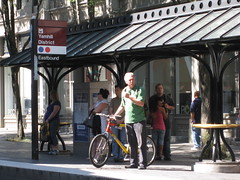
[Portland light rail station with biker waiting for the train.]

Misconceptions about Livability


A new report from the Federal Highway Administration (FHWA) looks at perceived barriers to livability projects in rural, tribal and other types of areas. The Regional Livability Workshops report summarizes five workshops held across the country and suggests strategies
"to raise awareness of transportation linkages to livability, and to provide resources to practitioners and the public to more effectively consider livability issues within the Federal transportation planning process."
While most communities do have a set of goals or vision statements, workshop participants noted that the most effective visions are those that emerge from a collaborative visioning, planning or scenario development process. Participants noted quite often, these efforts include a strong outreach process that brings together both multidisciplinary interests as well as public and private constituencies. These processes can spur lasting relationships and coalitions that ultimately help create local keepers of the vision. It was also noted when a strong vision is present, project prioritization and project delivery methods can demonstrate clear policy choices between various alternatives. This direct link helps foster identification and implementation of transportation investments in support of community goals.

Community goals reflect the unique character, values, and priorities of a given place. Participants discussed the need to better align regional, State or Federal goals in transportation and mobility with local community goals. One strategy includes documenting existing goals at each level (Federal, State, regional and local) or across differing agencies and identifying where commonalities or conflicts exist. This can help to understand the tradeoffs or policy issues that need to be considered to more effectively align transportation priorities with local livability goals.

Livability TA

Environmental Protection Agency
EPA’s fall 2011 Request for Letters of Interest (PDF: http://www.epa.gov/smartgrowth/pdf/buildingblocks_2011_rfli.pdf) for direct assistance from the agency is now open. EPA will be accepting letters of interest for the next round of Building Blocks for Sustainable Communities from September 28 to October 28, 2011. Subsequent application periods will depend on budget constraints and will be announced on the Smart Growth page.

Local Stories

Twitter brings interesting stories to me and succinctly exposes my brain to useful and inexpensive tools for transit and other mobility options. This article from the Tennessean, More Cyclists, Walkers Counted in Middle TN, demonstrates that a cheap, volunteer tool can provide a snapshot of how people travel at what locations. Since a pedestrian-friendly street network is essential to transit, a one-day audit in a Tennessee community supplied useful information about where people are willing to walk and bike. Although biking is not an option for many handicapped individuals and is not a preference for many others, the bicycling rate is an indicator of how safe the street network feels to non-auto users.

Th Broome County, New York area (Binghamton area) is creating a one-call transportation center. This week, CTAA hosted a Transportation Solutions training, which was covered in the local news. The Broome-Tioga Mobility Management Project (BTMMP) call center will be housed at the local United Way. The BTMMP partnership was created to help meet the need for increased transportation services in both Broome and Tioga Counties. BTMMP will help those in need to arrange and coordinate transportation using all available resources. The BTMMP partners have been planning the project since December 2010.
BTMMP is a multi-agency partnership funded in part by the Community Foundation for South Central New York; the AmeriCorps National Service Program; Tioga Transport, Inc.; and with in-kind contributions from BTMMP partner organizations.

Food for thought: One thing I noticed in reading a local article about transportation options desired in a rural community was that the meeting to air the community's wish list was taking place on a weekday morning during traditional work hours. Well-organized advocates and staff of government organizations were expected. No mention was made of remote access or feedback or why a time that would exclude most working people would be chosen.
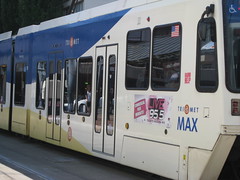
[Portland light rail on a Saturday morning.]

Tuesday, December 7, 2010

2010 Highlights

I am starting the recap early this year, going over notes, my blog, the index of my old newsletter, and thinking about what from 2010 resonates and will last as useful resources and information as the calendar page turns over to 2011.

Wishing you and your loved ones a happy and a healthy holiday season and a joyous new year.

Stay Up to Date at the National Resource Center for Human Service Transportation Coordination
Go to the NRC website - www.NRCtransportation.org - for news and information from around the country, such as the blogs of the United We Ride Ambassadors. The NRC also has resources about all aspects of public and human services transportation, including several compilations about significant topics.

New News Sources

The Association for Commuter Transportation (ACT) has launched a newsletter, Caryn's Corner, named for Executive Director Caryn Souza.

The National Conference of State Legislatures (NCSL)created two transportation-related newsletters, one is the Transportation Coordination Quarterly Newsletter, a compilation of news and resources involving coordination, and the other a monthly newsletter that spans transportation sectors.

Specialized Taxi Transportation

In 2010, the Taxi, Limousine, and Paratransit Association (TLPA) prepared reports that address the taxi industry's role in providing non-emergency medical transportation and accessible transportation. These are Assessing the Full Cost of Implementing An Accessible Taxicab Program and Non-Emergency Medicaid Transportation (NEMT): How to Maximize Safety and Cost Effectiveness
Through Better Use of Private For-Hire Vehicle Operators
. The accessible transportation report discusses how the taxi industry works in terms of the practical obstacles and costs of providing accessibility where the additional costs fall on mostly small businesses and independent contractors. The NEMT report provides an excellent explanation of what coordination provides and what models of NEMT exist throughout the country.

Learning about Health Care Changes
For information on what states must accomplish and are doing to fulfill the mandates of the new health care law, the National Governors' Association (NGA) has created a website, the Health Reform Implementation Resource Center, a product of the State Consortium on Health Care Reform Implementation (State Consortium), which provides information and technical assistance to states about requirements, offers options and best practices and synthesizes feedback to federal agencies on issues that affect state implementation. The website has resources on aspects of the health reform law that are likely to have the biggest effect on states – the Medicaid expansion, the establishment of health insurance exchanges, insurance regulations, and delivery system initiatives, along with important governance, coordination and timing issues for states are available from NGA and on each of the Consortium members' websites.

The American Public Human Services Association (APHSA) has a short presentation, Health Reform: Issues for State Governments, that explains the effective dates of different provisions, what will happen to Medicaid, and summarizes long-term care and other provisions.

With greater numbers of people to be covered by Medicaid and preventive and maintenance medicine to be practiced, there may well be many more people traveling to regular doctor appointments. The Community Transportation Association of America is assisting providers with training, the Competitive Edge, to enable providers to be more efficient for when the new law takes effect.

Transportation for Challenged Populations

The American Public Transportation Association (APTA) report, Funding the Public Transportation Needs of an Aging Population, discusses the depth of the growing need for transportation services among Older Americans and the amounts of funding that will be necessary to provide those services. In addition to APTA, the report was guided by input from a technical working group that included CTAA, Easter Seals Project ACTION, and the AARP Public Policy Institute, all members of the National Consortium on the Coordination of Human Services Transportation.

The Federal Transit Administration (FTA) has a multitude of resources related to the intersection of transit and the ADA. These include regulations, legal guidance, details about equipment and paratransit eligibility, and so much more. A new page has topic guides on selected ADA topics.

The Easter Seals Project ACTION website always has resources for government staff, transportation providers and transportation-challenged populations. These resources offer information to improve services, educate staff and enhance public participation.

Census Guides the Future

Census 2010 and Transit: What's at stake? is a web portal that the NRC created for transit-related Census resources. The 2010 Census will help communities receive over $400 billion in federal funds each year for many activities including transit and human services. Visit the NRC's Census 2010 page to read about how public transportation may be affected, learn about possible outcomes for tribal communities, and find a list of quick links to audio and video clips about the Census.

State-Level Sustainability Plans
State-wide sustainability and livability movements are turning into established parts of state governments with plans that span different sectors of the economy and public works, including transportation. At their core, these plans envision transportation systems that meet present needs without compromising the lifestyles of future generations.

Hawaii's plan, Hawaii 2050, incorporates increased public transportation as a goal and an indicator of progress under its community and social well-being heading. Hawaii's plan goes way beyond the environment, addressing such different issues as the economy, education and health care.

The Department of Transportation for Washington, D.C., the equivalent of a state department of transportation that also has jurisdiction over local roads, releases its Sustainability Plan 2010, which promotes transit, biking and walking and seeks to reduce energy consumption.

The Oregon Department of Transportation also has a sustainability plan. It emphatically incorporates public transportation and the environmental and health benefits of zero and low-emission modes. The state DOT also commits to a policy of locating its own facilities in places that employees can reach by walking and transit.

State Planning Participation

The National Association of Development Organizations (NADO), via its Rural Transportation Clearinghouse, posted a presentation that local officials can use or modify for orientation of new board members, transportation committee members or staff. The Guide for Rural Local Officials: Evaluating Your Input into the Statewide Transportation Planning Process explained the local role in state transportation planning across modes. The guide was also available in a PowerPoint format.

NADO also released a new online version of its Metropolitan and Rural Transportation Planning: Case Studies and Checklists for Regional Collaboration. This guide was intended for leadership and professional staff of metropolitan planning organizations (MPOs), rural planning organizations (RPOs), state departments of transportation (DOTs), and regional development organizations that are involved in transportation planning, programming, and service delivery, and other planning partners.

The Federal Highway Administration (FHWA) has released an MPO primer, Staffing and Administrative Capacity of Metropolitan Planning Organizations. It is a terrific nuts and bolts detailed description of Metropolitan Planning Organizations (MPOs), their staffs, projects, funding, partnerships and formal arrangements with state and local governments.

Livability and Sustainability
The Initiative for Sustainable Communities and States (ISCS) compiles the news and resources of the federal interagency sustainability partnership in one place. There is information about funding, policy, and examples for states and localities.

The American Association of State Highway and Transportation Officials (AASHTO) has a Transportation and Climate Change Resource Center with resources about how state departments of transportation, regional planning organizations and states are addressing climate change.

Always a solid source is the FTA's livability page, which is kept up to date with funding programs, case studies, and news and links related to the interagency sustainability partnership.

Also on My Favorites List

TCRP SYNTHESIS 85: Effective Use of Citizen Advisory Committees for Transit Planning and Operations is a must-read for anyone who either works with public involvement and stakeholder groups, recommends them, or whose work is in some way involves public involvement.

TCRP Report 140: A Guide for Planning and Operating Flexible Public Transportation Services, a product of the Transit Cooperative Research Program, gets into the weeds on what constitutes a non-fixed route, flexible transit service, why communities and regions choose them, the relative costs and how they operate either on their own or as supplements to traditional fixed route and ADA paratransit service.

Compilation of tribal transit resources, which appeared on this page earlier in the year.

An Express Stop blog post offers a compendium of emergency preparedness resources.

Relevant to public employees and citizens in every state is a National Conference of State Legislatures (NCSL) Fiscal Brief: State Balanced Budget Provisions, which explains what is meant by a balanced budget, to which funds state constitutional and statutory provisions apply and what enforcement mechanisms exist. Interesting is how varied balanced budget requirements are. This not a one-size-fits-all term.

Wednesday, November 10, 2010

Events and Resources from Around the TA Network

National Transit Institute

The National Transit Institute (NTI)has upcoming classes related to coordination.

Public Involvement in Transportation Decisionmaking
This course will:
* Identify public involvement challenges
* Describe U.S. DOT transportation decision-making processes, including those that trigger the National Environmental Policy Act (NEPA)
* Describe the relationship between public involvement and decisionmaking
* Develop a public involvement plan with stakeholder assistance that includes attention to non-traditional populations as an evaluation component
* Describe interest-based problem solving and their underlying values
* Identify ways to enhance public involvement plans
Public Involvement in Transportation Decisionmaking will be given Dec. 8-10 in Arlington, VA; but check NTI's webpage for the course for future offerings.

Managing Community Mobility

This course will:
* Introduce the concept of mobility management and its application to transportation operations at the community level.
* Identify funding resources available for implementing and operating mobility management programs.
* Describe how to develop the Coordinated Public Transit and Human Service Transportation Plan “Coordinated Plan.”
* Identify the necessary tools and resources to effectively implement a mobility management program.
* Present case studies of successful mobility management models.
* Discuss the skills of a mobility manager.
The course is being held in three different locations from December through April.

Easter Seals Project ACTION


Easter Seals Project ACTION
has a new Livable Communities page on its website. Featured are ESPA's publications about accessible streets, transit, and universal design as well as links to government and other resources.

ADA Essentials for Transit Board Members: Fundamentals of the Americans with Disabilities Act and Transit Public Policy, produced with the American Public Transportation Association (APTA), is a primer on transit's responsibility in realizing the goals of the Americans with Disabilities Act (ADA) and the legal obligations that the ADA established. The publication addresses traditional fixed-route service and transit facilities, but does not discuss deviated route or other types of service to which the ADA does not apply. It also provides information about federal transportation initiatives related to the ADA, such as United We Ride.

ESPA is hosting an audio conference, Developing Flexible Policies to Empower Transit and Customers with Disabilities, on Dec. 8. The audio conference will cover modifications to transit policies that enable access by customers with disabilities and legal requirements for modifications to policy. The program will also feature several examples of ways in which flexibility can help create a more accessible transportation experience for customers with disabilities.

Federal Highway Administration
(FHWA)

The next Pedestrian Safety Webinar will take place on Tuesday, November 23 from 1:00-3:00 Eastern Time. Learn about pedestrian safety initiatives in New York City and California. For information, go to https://www.nhi.fhwa.dot.gov/resources/webconference/web_conf_learner_reg.aspx?webconfid=21797.

Wednesday, July 14, 2010

Be a Pilot Community

Less than a week is left to volunteer to be a pilot for the walk-friendly communities project. July 19 is the deadline to apply for this Federal Highway Administration program.

[This is} a nationwide program with the goal of encouraging towns and cities throughout the United States to establish (or recommit to) a high priority for encouraging and supporting more safe walking. The program is aimed at improving a wide range of conditions and facilities related to walking, including safety, transportation, access, and physical activity.

The current deadline is for a second round of the program, which will test the tools developed in the first round. Details are available at http://www.walkfriendly.org/pilot.cfm.

Information about bike/ped programs is also available at http://www.pedbikeinfo.org/.

Thursday, June 24, 2010

Working with Low Literacy Populations

Thanks to Jane Hardin of the Community Transportation Association of America for recommending an excellent resource for including people who either are unable to read well or are not fluent English speakers, whether or not they read in their native languages. Low literacy is generally a marker for low income populations and populations that need workforce and human services assistance.

How to Engage Low-Literacy and Limited-English-Proficiency Populations
, issued by the Federal Highway Administration in 2006, is ostensibly geared toward transportation-oriented community participation, but can be used for any type of community participation effort in which low literacy and non-English speakers should be involved.

The FHWA report explores what is meant by low literacy and how to detect its subtle signs. People are often ashamed of their inability to read and communicate in English. They have practiced ways of hiding illiteracy. Utilizing people in the community who know the culture is helpful as is being aware of the subtle clues of illiteracy.

The report offers a multitude of methods for reaching people who do not read well, including places to go, people to use, and ways to operate a meeting. These methods will allow people who are illiterate to participate fully and on par with better educated populations.

Though the FHWA report is a few years old, it provides the best material I have seen that addresses the specific issue of including low literacy community members.

Thanks again to Jane for mentioning this resource at our last meeting of the Technical Assistance Provider Network.