Friday, November 11, 2011

Veterans and Other Resources on the NRC Website

Happy Veterans Day and 11-11-11!

Today, the Veterans Transportation and Community Living Initiative officially begins and the National Resource Center (NRC) releases a new report, Transportation for America's Veterans and Their Families. The report showcases the NRC's - particularly, its ambassadors' - successes in assisting veterans by improving transportation through effective partnerships and coordination. Some of these stories involve transporting veterans to VA medical centers and others involve travel to the same places we all need to go to. The report demonstrates what coordination and committed partnerships can achieve to improve transit and transportation services.

For more resources relating to veterans and serving their transportation needs, please visit the NRC Veterans Transportation Bookshelf. Like all of the NRC bookshelves, there is comprehensive information about the topic.

[Snoopy and Woodstock at the Minneapolis airport.]

Friday, October 14, 2011

Upcoming Events & Training; Local Perspectives on Livability

Federal Transit Administration
FTA has upcoming listening sessions and webinars about civil rights and environmental justice. The listening sessions will discuss the proposed circulars about those topics.

National Transit Institute
Strollers, Carts, and Other Large Items on Buses and Trains (TCRP Synthesis 88) - webinar - Nov. 17, 2011. This webinar will highlight practices implemented by transit agencies to manage the capacity on vehicles carrying customers with large items, including wheelchairs; Segways; scooters and other mobility aids; strollers; bicycles; luggage, and miscellaneous items, such as skis and dog carriers. A review of the various types of transit vehicles and modifications agencies have made to their vehicles to accommodate large items will be discussed.
Managing Community Mobility - various dates to March 2012.
Comprehensive ADA Paratransit Eligibility - various dates to March 2012.

Community Transportation Association of America
CTAA Train-the-trainer for driver training, safety and security, and transportation solutions coordinator work. Visit CTAA's training page for more information.

Easter Seals Project ACTION
Accessible Transportation Coalitions Initiative - currently accepting applications. ESPA will select 10 communities through a competitive application process to participate. ATCI is a systems change model designed to improve accessible transportation options for people with disabilities. Selected communities will receive on-site facilitation and targeted technical assistance during a two-day event to learn the ATCI model and develop an accessible transportation plan. ESPA will continue to provide targeted technical assistance over the subsequent year while communities implement this plan.
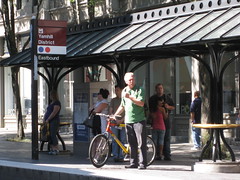
[Portland light rail station with biker waiting for the train.]

Misconceptions about Livability


A new report from the Federal Highway Administration (FHWA) looks at perceived barriers to livability projects in rural, tribal and other types of areas. The Regional Livability Workshops report summarizes five workshops held across the country and suggests strategies
"to raise awareness of transportation linkages to livability, and to provide resources to practitioners and the public to more effectively consider livability issues within the Federal transportation planning process."
While most communities do have a set of goals or vision statements, workshop participants noted that the most effective visions are those that emerge from a collaborative visioning, planning or scenario development process. Participants noted quite often, these efforts include a strong outreach process that brings together both multidisciplinary interests as well as public and private constituencies. These processes can spur lasting relationships and coalitions that ultimately help create local keepers of the vision. It was also noted when a strong vision is present, project prioritization and project delivery methods can demonstrate clear policy choices between various alternatives. This direct link helps foster identification and implementation of transportation investments in support of community goals.

Community goals reflect the unique character, values, and priorities of a given place. Participants discussed the need to better align regional, State or Federal goals in transportation and mobility with local community goals. One strategy includes documenting existing goals at each level (Federal, State, regional and local) or across differing agencies and identifying where commonalities or conflicts exist. This can help to understand the tradeoffs or policy issues that need to be considered to more effectively align transportation priorities with local livability goals.

Livability TA

Environmental Protection Agency
EPA’s fall 2011 Request for Letters of Interest (PDF: http://www.epa.gov/smartgrowth/pdf/buildingblocks_2011_rfli.pdf) for direct assistance from the agency is now open. EPA will be accepting letters of interest for the next round of Building Blocks for Sustainable Communities from September 28 to October 28, 2011. Subsequent application periods will depend on budget constraints and will be announced on the Smart Growth page.

Local Stories

Twitter brings interesting stories to me and succinctly exposes my brain to useful and inexpensive tools for transit and other mobility options. This article from the Tennessean, More Cyclists, Walkers Counted in Middle TN, demonstrates that a cheap, volunteer tool can provide a snapshot of how people travel at what locations. Since a pedestrian-friendly street network is essential to transit, a one-day audit in a Tennessee community supplied useful information about where people are willing to walk and bike. Although biking is not an option for many handicapped individuals and is not a preference for many others, the bicycling rate is an indicator of how safe the street network feels to non-auto users.

Th Broome County, New York area (Binghamton area) is creating a one-call transportation center. This week, CTAA hosted a Transportation Solutions training, which was covered in the local news. The Broome-Tioga Mobility Management Project (BTMMP) call center will be housed at the local United Way. The BTMMP partnership was created to help meet the need for increased transportation services in both Broome and Tioga Counties. BTMMP will help those in need to arrange and coordinate transportation using all available resources. The BTMMP partners have been planning the project since December 2010.
BTMMP is a multi-agency partnership funded in part by the Community Foundation for South Central New York; the AmeriCorps National Service Program; Tioga Transport, Inc.; and with in-kind contributions from BTMMP partner organizations.

Food for thought: One thing I noticed in reading a local article about transportation options desired in a rural community was that the meeting to air the community's wish list was taking place on a weekday morning during traditional work hours. Well-organized advocates and staff of government organizations were expected. No mention was made of remote access or feedback or why a time that would exclude most working people would be chosen.
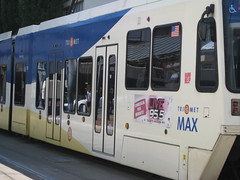
[Portland light rail on a Saturday morning.]

Tuesday, October 4, 2011

State DOT Survey Responses - Effectiveness of Federally Mandated Coordination Planning

National Cooperative Highway Research Program Research Results Digest 354, A Review of Human Services Transportation Plans and Grant Programs is worth a careful read. While I am summarizing parts of the report here that apply nationally, there are in-depth portions about particular states that are illuminating. This report is part of the series of ongoing research that is performed for AASHTO's Standing Committee on Public Transportation. The NRC Director, Chris Zeilinger, serves as a liaison to the panels that oversee all the work that is conducted under NCHRP Project 20-65.

State DOTs were surveyed to state the effectiveness of the coordinated planning effort (1) in meeting "FTA goals of enhancing transportation access, minimizing duplication of services, and facilitating the most appropriate and cost- effective transportation possible with available resources; and (2) "ascertain[ing] the cost of developing and maintaining these Coordination Plans (in terms of time and money) to ensure that resources are being used wisely and effectively, resulting in the better, more cost-effective and coordinated programs that the plans are expected to foster."

Opinions from 21 states


Twenty-one states responded to the survey. Afterward detailed telephone discussions in six geographically and demographically representative states were conducted with staff from state DOTs, planning organizations, transit agencies, human service transportation providers and non-governmental organizations.

Benefits reported from the requirement to draft coordination plans with stakeholder input were "enhancing transportation access for target populations, increasing commitment/participation in the plan development at both the state and local levels, improving coordination, and creating a general understanding of eligible JARC and NF grants." Disadvantages of the current funding streams and their administrative requirements included burdens on existing staff, while not having the resources to hire additional staff. Another problem reported was the uncertainty of future funding, which inhibited taking advantage of available funding for fear that services could not be sustained.

Specific improvements suggested


Prominent among the suggestions for improving transportation funding to meet coordination goals was "the consolidation of the Section 5316 JARC and Section 5317 NF grant programs with other federal grant programs such as Section 5310, 5311, and 5307."
With consolidation, the respondents indicated that the individual grant program goals could still be reflected in program and planning requirements, including dedicating percentages of funding to each program goal. Section 5310, Transportation for Elderly Individuals and Individuals with Disabilities, was the most frequently mentioned program for consolidating the JARC and NF grants, and several respondents indicated that these grant programs could also be consolidated with Section 5311, the Rural and Small Urban Areas grant program. By consolidating the JARC and NF grants with Section 5310 and/or 5311, the respondents felt that the states could manage the program more efficiently, while still developing a Coordination Plan (as required for Section 5310) and serving similar target populations.
The report authors pointed to concern expressed in an AARP report that the needs of target populations would be neglected were funding streams to be consolidated. That report is Policy Options to Improve Specialized Transportation.

Especially interesting is the discussion of the benefits reported about coordinated planning and its limits given the realities of current funding, lack of local control, and the difficulty in meeting the local match requirement. "[M]any of the states noted either that they believe human services transportation did not necessarily improve because of the plan, or it was difficult to tell if it had." There was broad spectrum of sources for local matching funds. Some states supplied the funds, while others did not or did so only in rural areas.

Money and performance metrics

Those involved in the telephone discussions expressed a desire for sustained funding and concrete guidance about performance measures beyond traditional transit rubrics.

[M]any respondents believe the use of standard performance measures fails to sufficiently measure the human services aspect of the projects and often favors urban areas over rural because often rural areas have higher transportation costs due to longer distances, dispersed customers and destinations, and little other infrastructure to support human services customers, which may make rural transportation appear ineffective or inefficient.

One suggestion made would be to tie grants to coordination and performance.
[R]espondents believe that by using performance measures and data, and linking federal funds to the results of this process, coordinated planning could make better use of quantitative information and link plans to results more closely. They believe that stakeholders making use of a performance-driven coordinated planning process would get even more out of the process of developing and working to implement the Coordination Plan.

Has the coordinated planning requirement delivered results?

The qualitative answer - in terms of improved and more efficient service to riders and potential riders - is generally no, or perhaps, not yet. Respondents indicated that the plans have achieved average to little success in meeting FTA's goals of minimizing the duplication of transportation services (81 percent) and facilitating the most cost-effective transportation possible with available resources (76 percent). However, states reported average to moderate success in "enhancing" transportation options for target populations.

Respondents felt the funding level and restrictive federal requirements for the JARC and NF grant programs often make it difficult to attract participants to the process. To increase participation of Section 5310 participants, one state offered an incentive for the participating agencies’ applications for vehicle grants.

Commitment and funding


It could be that in many places, the coordination process is ongoing and leading to improved efficiency and service. The respondents indicated that "the level of commitment/participation in the development of the Coordination Plans has been relatively strong at both the state and local levels. Over 70 percent of the survey respondents indicated that the level of commitment/participation at the state and local levels was average or better." Some states reported that the coordination process did add parties who had not been at the table before.

A pervasive issue the report discussed was funding, its sustainability and adequacy.
Many respondents indicated that the Coordination Plans have a “shelf life” of 4 years for non-attainment areas and 5 years for attainment areas, and they do not anticipate that the costs will be in excess of $250,000 (at least for the state). Additionally, while some states paid for the cost of initial Coordination Plan development, no state responded that the state would pay for the maintenance of the plans.

Later on in the report, responses about funding adequacy and obstacles showed widespread belief that "there is not enough money in these programs (particularly JARC) because the need is significantly larger than the funds. As a result, they report that the funds frequently are used for existing/on-going services (preservation) rather than new projects." There was also a perceived lack of clarity about the "beyond ADA" requirement for New Freedom grants.

Many of the plans were developed by consultants or existing staff, and a very few by mobility managers. There was no discussion about the effectiveness of the process, the plans or the resulting service in terms of what party prepared the plans.

Projects chosen

The JARC and New Freedom projects chosen were, from most to least, Mobility Management, Operating Funds, Capital Purchases, ADA Service, Flex Route Bus Service Travel Training, Expanded Service, Dial-a-Ride Demand Response, Feeder Service and Volunteer Transportation, with the last five each garnering one state response.

Thursday, September 22, 2011

Emergency Planning - Collection of Resources & Events

Maybe it was the week of the earthquake and the hurricane that jolted the thought of emergency preparedness to come to the attention center of my brain. We have had a spring and summer with quite a bit of emergency planning, actual disasters and the recoveries that follow. In some cases, the weather events were less than expected and in others, much worse. Here are some resources and events for transportation-related emergency planning issues.

Resources

Preparedness Considerations for Aging Americans - recorded webinar - This webinar provides information about specific preparedness steps for Aging Americans. Speakers will include representatives from the Federal Emergency Management Agency and leaders at the forefront of Aging American Preparedness. Advanced registration for this webinar is not required.

This and other emergency planning webinars are archived at http://www.citizencorps.gov/news/webcasts.shtm.

National Association of County and City Health Officials
NACCHO has a Learning Community on Emergency Planning and Preparedness for People with Disabilities. NACCHO’s Health and Disability Project is supported by the National Center on Birth Defects and Developmental Disabilities at the Centers for Disease Control and Prevention.

Events


How to be FEMA Ready When Disaster Hits
(Rebroadcast) - audio/web broadcast - Oct. 11, 2011 - Pointing out that within the last five years, every state has had at least one disaster declaration, APWA presents this program to help identify what should be ready before disaster strikes and what can be expected when dealing with FEMA after the disaster. Participants will learn how to justify the value of a good asset management system that gives quantifiable information to help identify the cost of bringing assets back into use and how to estimate the length of time and resources involved in the recovery process.

National Evacuation Conference
- Feb. 7-9, 2012, New Orleans - Conference brings together the fields of transportation and emergency management to discuss evacuation planning to accommodate the needs of all people before, during and after a major disaster. The objective is to foster an interdisciplinary exchange of ideas surrounding a broad range of evacuation issues, particularly mass evacuations.

Public Works Peer Activity


American Public Works Association
APWA is developing an emergency management peer network. It requests that members share their expertise about the different facets of emergency preparedness, response, mitigation, planning, and recovery. The "database will operate as an in-house listserv for APWA members who need advice or information on emergency management matters."
Coast Starlight train - Calif.
[View from a California train ride.]

Blasts from the Past


Here are some emergency preparedness resources featured before.

Community Transportation Association of America

National Resource Center
The NRC keeps an Emergency Preparedness and Response bookshelf with reports about transportation issues in disaster planning.

CTAA has an Emergency Evacuation page on its site with checklists, toolboxes and other resources that focus on populations, locations, and different types of professionals.

National RTAP - the Rural Transit Assistance Program
RTAP has a free training module, Emergency Procedures for Rural Transit Drivers. The training includes a Learner’s Guide, a Self-paced eLearning Course Disc, an Instructor’s Guide, and a disc with videos and a trainer’s PowerPoint presentation. It can be used in a classroom setting or by a single student, and is appropriate for both new and experienced transit drivers. The training offers information on preparedness for hazards and threats that may be encountered as a transit operator. This training module also offers targeted training on the Seven Steps of Crisis Management.

For more information, please contact Pam Russell DiGiovanni at 888-589-6821 or pdigiovanni@nationalrtap.org.

For those even more involved in emergency planning is FEMA's lessons learned website. For those updates, there is a lessons learned newsletter available at the site.

Thursday, September 1, 2011

Webinars and Events

Performing For Individual, Organizational and Collective Impact - webinar - Sept. 14, 2011 at 2 p.m. Eastern time. The Partnership for Mobility Management and CTAA jointly present this webinar to explore the fundamentals of performance measurement. The webinar will cover results-based accountability to support quality of life, and mobility management measures that gauge success of programs and outcomes for customers. 

Creative Solutions to Reduced Funding for Public and Human Services Transportation - webinar - Sept. 20, 2011 at 2 p.m. Eastern time. Webinar speakers are representatives of communities that have taken different approaches to solving or alleviating the problem of cutbacks as well as a panel representing national organizations.  

Digital Transportation Exchange (DTE) - Stakeholder meeting in-person or via webcast or phone - Sept. 16, 2011 at 9 a.m. Eastern time. DTE is being created by DOT as an online platform for transportation solutions. The stakeholder meeting is taking place during the platform's formation to give DOT feedback from stakeholder groups and subject matter experts. Respond by tomorrow, September 2, by email to open@dot.gov and indicate how you intend to participate. Thank you to Easter Seals Project ACTION for this news. 

[Angel's Flight railway in downtown Los Angeles.]

Office of Civil Rights Workshop - Sept. 22-23, 2011, Berkeley, CA. FTA Staff will be available to review DBE Goals and Title VI & Limited English Proficiency (LEP) Programs. There will also be trainings covering Disadvantaged Business Enterprise (DBE) program requirements, Equal Employment Opportunity (EEO) regulations, Title VI Requirements for FTA recipients, and Limited English Proficiency (LEP) rules. (This workshop will be hosted in conjunction with the California Association of Coordinated Transportation (CalACT) Autumn Conference. It is not required to attend the CalACT Autumn Conference in order to attend the FTA Office of Civil Rights workshop.)  

NTI has upcoming webinars and classes around the country on many topics, including the National Transit Database, reporting to the rural transit database, mobility management, funding for transit maintenance, and small systems waivers

Tuesday, August 30, 2011

DOT Developments: Veterans and Bike/Ped Improvements

Department of Transportation
DOT Secretary Ray LaHood promoted the Veterans Transportation and Community Living initiative in his blog, the Fastlane. Meant to improve transportation access to community life, employment, services, and care, the funding will be primarily for development and improvement of one-call/one click services. The deadline for applications is Sept. 16, 2011.

Information about the initiative is also available from staff at the National Resource Center for Human Service Transportation Coordination.

Bike/Ped Policy Statement


The Federal Transit Administration (FTA) issued a policy statement on the eligibility of pedestrian and bicycle improvements for funding under federal transit law - up to a radius of one-half mile for pedestrian improvements and "all bicycle improvements located within three miles of a public transportation stop or station." The FTA declares a "de facto physical and functional relationship to public transportation." Funding for bicycle or pedestrian improvements at greater distances to public transportation may also be eligible for FTA funding if it is demonstrated that "the improvement is within the distance that people will travel by foot or by bicycle to use a particular stop or station." And that's just the FTA's introduction to the statement.

[Snoopy and Woodstock at Minneapolis airport.]

The funding streams that may be used for these improvements include:
Section 5307 Urbanized Area Formula Program;
Section 5309 New Starts and Small Starts Major Capital Investment Programs;
Section 5309 Fixed Guideway Modernization Program;
Section 5309 Bus and Bus Facilities Discretionary Program;
Section 5310 Elderly Individuals and Individuals with Disabilities Formula Program;
Section 5311 Non-Urbanized Area Formula Program;
Section 5311 Public Transportation on Indian Reservations;
Section 5316 Job Access and Reverse Commute Formula Program (JARC);
Section 5317 New Freedom Program; and,
Section 5320 Paul S. Sarbanes Alternative Transportation in Parks and Public Lands.

Other statutory requirements to obtain bike/ped funding specify that the funds be used to "enhance economic development or incorporate private investment; to enhance the effectiveness of public transportation project and relate physically or functionally to that project, or to establish new or enhanced coordination between public transportation and other transportation; and to provide a fair share of revenue for public transportation."

Pedestrian projects may receive up to 90 percent federal share and bicycle ones 95 percent. In terms of bike-sharing programs, bike storage facilities can be funded, but not bicycles.

Free Copyediting


Reading through the document also produced an entertaining moment. The FTA thanked the two commenters who "noted that the word 'complimentary' should be spelled 'complementary.'" And the copyediting was complimentary.

Monday, July 25, 2011

Rural and Other Sustainability News - Grants & Webinars

There is assistance for rural communities interested in submitting applications for Sustainable Communities Regional Planning Grants and Transportation Investment Generating Economic Recovery (TIGER) grants.

Planning Grants


PolicyLink announces its updated guide for local governments, metropolitan planning organizations (MPOs), nonprofits, foundations, and educational institutions. The 2011 Sustainable Communities Regional Planning Grant Guide: How to Incorporate Equity into your Grant Application provides information on how regions can incorporate social equity, which the Department of Housing and Urban Development (HUD) has made a significant priority of Sustainable Communities. Please be aware that the guide is not specifically designed for rural communities.

The Transportation Investment Generating Economic Recovery (TIGER) grant program is a great opportunity for rural communities to leverage federal funds for local transportation projects. To help communities apply these very competitive grants, the American Public Transportation Association, the National Association of Development Organizations, the National League of Cities, PolicyLink, Reconnecting America, Rural Assembly, Smart Growth America, and Transportation for America have joined together to encourage rural communities to submit superior applications for this funding.

The TIGER grants are called a "great opportunity for rural communities to leverage federal funds for local transportation projects." A webinar, TIGER Grants and Rural America, on Wednesday, August 3, 2011 at 2:00 PM EDT, will provide basic tips for outreach and education about the TIGER program, including an overview of TIGER, discussion of innovative rural transportation projects, and examples from two successful rural projects from earlier TIGER grant cycles.

[Abe Lincoln and helper at Metro Center station handing out ticket discounts for Nationals baseball games.]

Funding Available


Below is an announcement from the Interagency Partnership for Sustainable Communities. All announcements are posted online at http://www.sustainablecommunities.gov. Funding is from the partner agencies, the Departments of Transportation, and Housing and Urban Development, and the Environmental Protection Agency.

DOT Federal Transit Administration Livability Grants
Up to $175 million in funding will be provided to increase and improve transportation options for communities. The Bus and Bus Facilities Program will fund up to $150 million to purchase or replace buses and to build bus-related facilities. Remaining funding will be provided through the Alternatives Analysis Program to help communities evaluate and select the best transit options to meet their transportation needs. Timeframe: application period now open, deadline is July 29.

DOT TIGER Grants
DOT’s TIGER program will give funding to capital construction and planning projects in surface transportation around the country. Grants will be awarded on a competitive basis for projects that will have a significant impact on infrastructure investment. Estimated timeframe: NOFA available fall, Interim Notice of Funding Availability available online now. Funding levels: $526 million for transportation projects with $140 million set aside for projects in rural areas.

HUD Communities Regional Planning Grants
HUD’s Regional Planning grants, in coordination with EPA and DOT, will provide funding of up to $68 million to improve regional planning efforts that integrate housing and transportation decisions, and increase state, regional, and local capacity to incorporate livability, sustainability, and social equity values into land use plans and zoning. Timeframe: Advanced NOFA available now, final NOFA available in July.

HUD Community Challenge Planning Grants
Up to $28 million will be available to assist communities in amending or replacing local master plans and coding system, with the goal of promoting sustainability at the local or neighborhood level. These grants also support the development of affordable housing through the development and adoption of inclusionary zoning ordinances and other activities such as acquisition of land for affordable housing projects. Timeframe: NOFA available in July.

EPA Brownfields Multipurpose Grants
For FY2012, the Brownfields Office will pilot a "multipurpose" grant opportunity. The grant would give a recipient flexibility in conducting assessment and cleanup activities at a specific site owned by the applicant, and would eliminate the delay that may occur when moving from assessment to cleanup when funding hasn’t been secured. Timeframe: RFP available mid-summer.

EPA Brownfields Area-Wide Planning Grants
EPA, in collaboration with HUD and DOT, will provide planning assistance to communities, many in underserved and economically disadvantaged areas, to develop area-wide plans for the reuse of brownfields properties. Timeframe: RFP available mid-summer.

EPA Brownfields Environmental Workforce Job Training Grants
EPA will provide grants to non-profit organizations to recruit, train and employ predominately low-income and minority, unemployed and under-employed residents from solid and hazardous waste-impacted communities. Timeframe: RFP available mid-summer.

EPA Brownfield Assessment Revolving Loan Fund and Cleanup (ARC) Grants
Through the ARC, brownfields assessment, RLF and brownfields cleanup grants, EPA will address sites contaminated by petroleum and hazardous substances, pollutants, or contaminants (including hazardous substances co-mingled with petroleum). Timeframe: RFP available late summer.

EPA Smart Growth Implementation Assistance (SGIA)
EPA, in collaboration with HUD and DOT, will provide technical assistance to communities to focus on cross-departmental coordination of policies, cities undergoing economic transition, infrastructure financing, historic preservation and downtown revitalization, and climate change adaptation. Estimated timeframe: RFP available early fall.

EPA Building Blocks II

The Sustainable Communities Building Blocks Program seeks to provide quick, targeted technical assistance to communities using a variety of tools that have demonstrated results and widespread application. This technical assistance will help selected local and/or tribal governments to implement development approaches that protect the
environment, improve public health, create jobs, expand economic opportunity, and improve overall quality of life. Estimated timeframe: RFP available late fall.